Foundations of Modern Psychiatry · Volume 1
La Mélancolie (1897)
Roubinovitch and Toulouse’s Clinical Study of Melancholia
The First English Translation of Its Key Chapters, with a Commentary
Available from Amazon

“The true melancholic has completely lost the faculty of experiencing sensations which can distract from his sorrow; and he is convinced that he will never be able to get rid of his psychological suffering.”
Roubinovitch and Toulouse, La Mélancolie (1897), p. 40

About the book
In 1897 two young Paris psychiatrists, Jacques Roubinovitch and Édouard Toulouse, published La Mélancolie, a 420-page study of the illness we now call major depression, awarded the Prix Lefèvre by the French Académie de médecine. Drawing on patients at the Sainte-Anne asylum, they described its symptoms, subtypes, course and outcome with a clarity that still feels modern: the patient who can no longer feel pleasure, the slowing of thought and movement, the conviction that the suffering will never end.
This volume presents the first English translation of the book’s key chapters, with its case histories and original illustrations, together with a commentary by Kenneth S. Kendler and Virginia Justis. It shows how the French tradition arrived, by the end of the nineteenth century, at a picture of depression that psychiatry still recognizes today.
The commentary and translation were first published in Genomic Psychiatry.
Inside this volume
- Preface by Kenneth S. Kendler and Virginia Justis
- Part I. The Commentary: “The Descriptive Psychopathology of Melancholia in Roubinovitch and Toulouse’s 1897 Monograph”, with additional quotations
- Part II. The Translation: the authors’ 1897 preface; Chapter I, History; Chapter II, Melancholia: Is It a Morbid Entity?; Chapter III, Symptomatology; Chapter IV, Clinical Varieties of Melancholia; and the first part of Chapter V, Etiology
- Fourteen case histories (Observations I to XIV), with the original photographic plates
- Afterword
- The table of contents of the 1897 edition
- A Who’s Who of Alienists, a Glossary and an Index of Names
Why Kendler and Justis brought it back
Melancholia, which we now call major depression, has been one of the two or three most important diagnoses in Western psychiatry since the late eighteenth century. Kendler and Justis place Roubinovitch and Toulouse’s monograph among the small handful of great clinical studies of the illness, beside Krafft-Ebing’s Melancholia of 1874 and Aubrey Lewis’s survey of 1934. Yet for more than a century it has been almost entirely absent from the English-language literature.
Read today, it shows something remarkable: clinicians have agreed on the core symptoms and signs of depression for more than 125 years.
- 420pages in the 1897 monograph, with 8 chapters and 22 case histories
- 9 of 9DSM-5 criteria for major depression clearly described in its pages
- 18 of 18characteristic symptoms and signs found in twentieth-century textbooks, all described
- 1stEnglish translation of its key chapters
A neglected classic
In the German literature, the shift to understanding melancholia as a disorder of mood was summed up by Krafft-Ebing’s 1874 monograph. Kendler and Justis argue that La Mélancolie played a comparable role in the French tradition. Yet the leading English-language histories of melancholia, by Berrios, Jackson and Jansson, do not mention it at all.
It was not always so. In their search for English readers of the book, Kendler and Justis found that a copy sat in the library of William James, who quoted one of its cases when writing his lecture on the “sick soul” in The Varieties of Religious Experience.
Strikingly modern
In the commentators’ judgment, the book’s descriptive psychopathology is at least as strong as the classic accounts of depression by Aubrey Lewis in English and by Krafft-Ebing and Kraepelin in German.
It captures the moment when melancholia stopped being seen as a “partial insanity”, a disorder of judgment, and became a disorder of mood: one that may occur without psychosis, and whose delusions, when present, grow out of the disturbance of mood itself.
What the translation lets you read
Part II gives English readers, for the first time, the clinical heart of the 1897 book: the authors’ preface and pages 1 to 272, from their history of the concept of melancholia to their account of its causes.
Chapter III, on symptomatology, is the longest. It opens with mental pain, its origins and its consequences, moves to the slowing of thought, the fading of memory and of the will, and then examines the body of the melancholic: face and posture, movement, sensation, breathing, circulation and secretions. Chapter IV sets out the clinical varieties of the illness, from depressive melancholia to melancholia with stupor, perplexed and anxious melancholia, and forms with and without delusion.
The translators’ notes stand at the foot of each page, and the 1897 page numbers are kept in the text, so every passage can be traced to the original. A Who’s Who of Alienists and a Glossary explain the people and the terms of the period.
The fourteen case histories
- Anxious melancholia with obsessions, mystical ideas and persecution
- Melancholia with various impulses
- Hysterical muteness mistaken for melancholic muteness
- Depressive melancholia without delusion
- Melancholic stupor with active delusion and catatonia
- Hereditary anxious melancholia with multiple delusions
- Anxious hereditary melancholia in a woman
- Melancholia with hypochondriac ideas and negation
- Systematized delusion of negations
- Ideas of negation in a depressive state of general paralysis
- Circular-form melancholia
- Hereditary melancholia
- Depressive melancholia in a feebleminded person
- Melancholic delusion with an ethical cause
Six themes of the commentary
1Thoroughness
Symptoms, signs, subtypes, course and outcome, described in vivid clinical detail drawn from long experience with patients.
2From judgment to mood
The book records how melancholia became a mood disorder, recognized in non-psychotic as well as psychotic forms.
3Mental pain
Echoes of the leading nineteenth-century theory of melancholia as psychalgia, a “pain without lesion” of the mind that distorts every impression from the outside world.
4How delusions form
A psychological account of delusion: the sufferer searches for reasons for his pain and concludes that he is ruined, guilty or unworthy of living.
5Suffering and resignation
An unusual emphasis on one pair of signs as the core of the syndrome: active psychological suffering together with resignation and “psycho-physical decrease”.
6Lived experience
Attention to how melancholia feels from within, including derealization and profound anhedonia, themes central to the phenomenology of depression today.
Ahead of their time
- They saw psychiatric diagnoses as provisional, lagging behind the rest of medicine.
- They distinguished melancholia, a psychobiological syndrome, from ordinary episodes of sadness, a diagnostic problem that persists in medical care today.
- They recognized mild “simple melancholia” that did not require the asylum.
- To tell melancholia from a reaction to circumstances, they advised assessing the depth of hopelessness and anhedonia.
- They noted that the symptoms later called Schneiderian are not specific to schizophrenia and occur in mood disorders.
“Only provisional symptomatic groupings which will one day be replaced by more exact conceptions of the nature of the relationships which unite the facts.”
On psychiatric diagnoses, La Mélancolie (1897)
“Nothing touches them anymore, nothing moves them. And from this comparison between their previous psychological state and their current state, they conclude that they have become unworthy beings.”
La Mélancolie (1897), pp. 40–41
“Often the patient expresses this reduction in his voluntary power by saying: ‘I would like to, but I cannot.’”
La Mélancolie (1897)
Kendler and Justis wrote this volume for two kinds of reader: those who want to understand how the clinical picture of depression took shape in the late nineteenth century, and clinicians today, who will find much of it familiar and recognize their own patients in its often poignant descriptions.
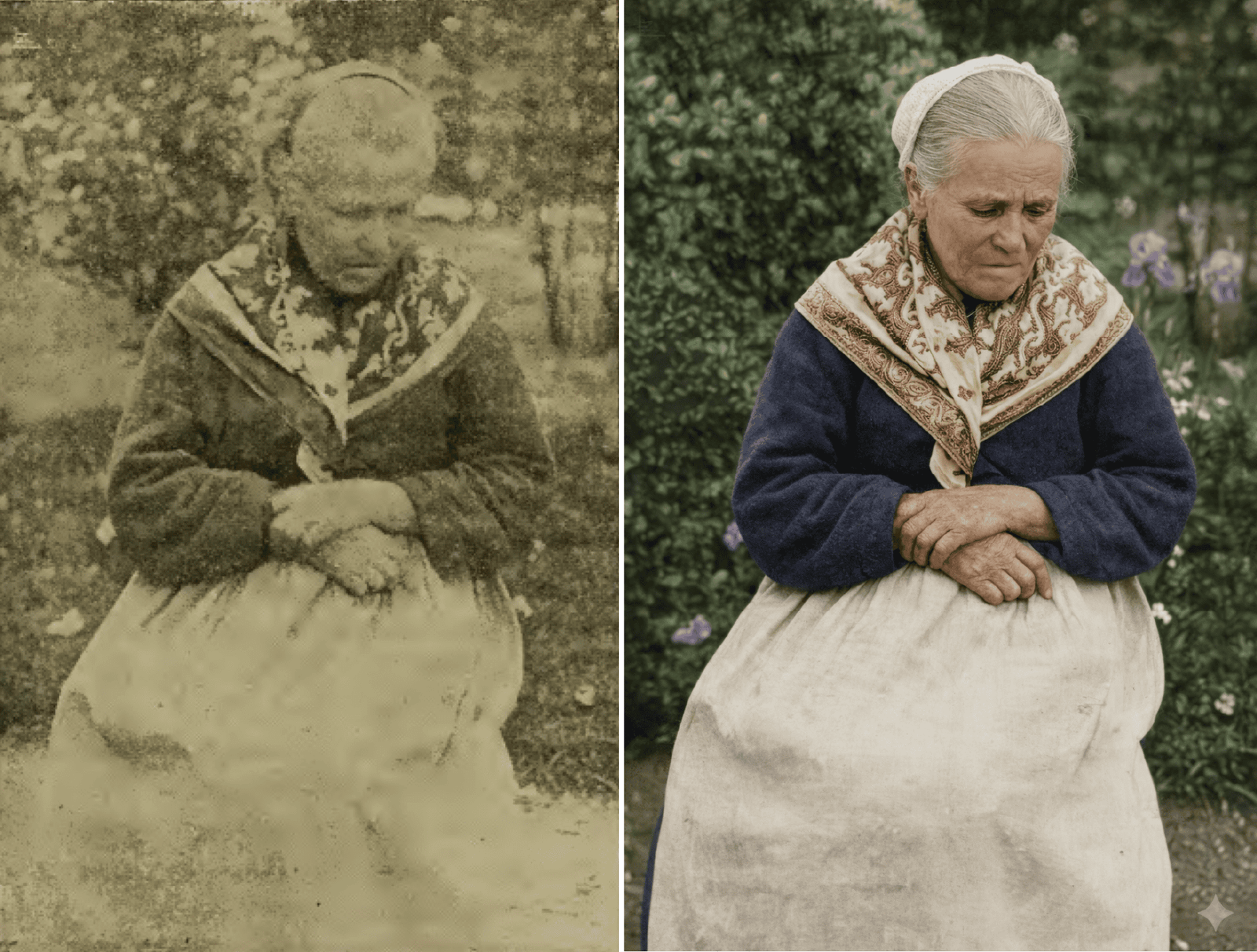
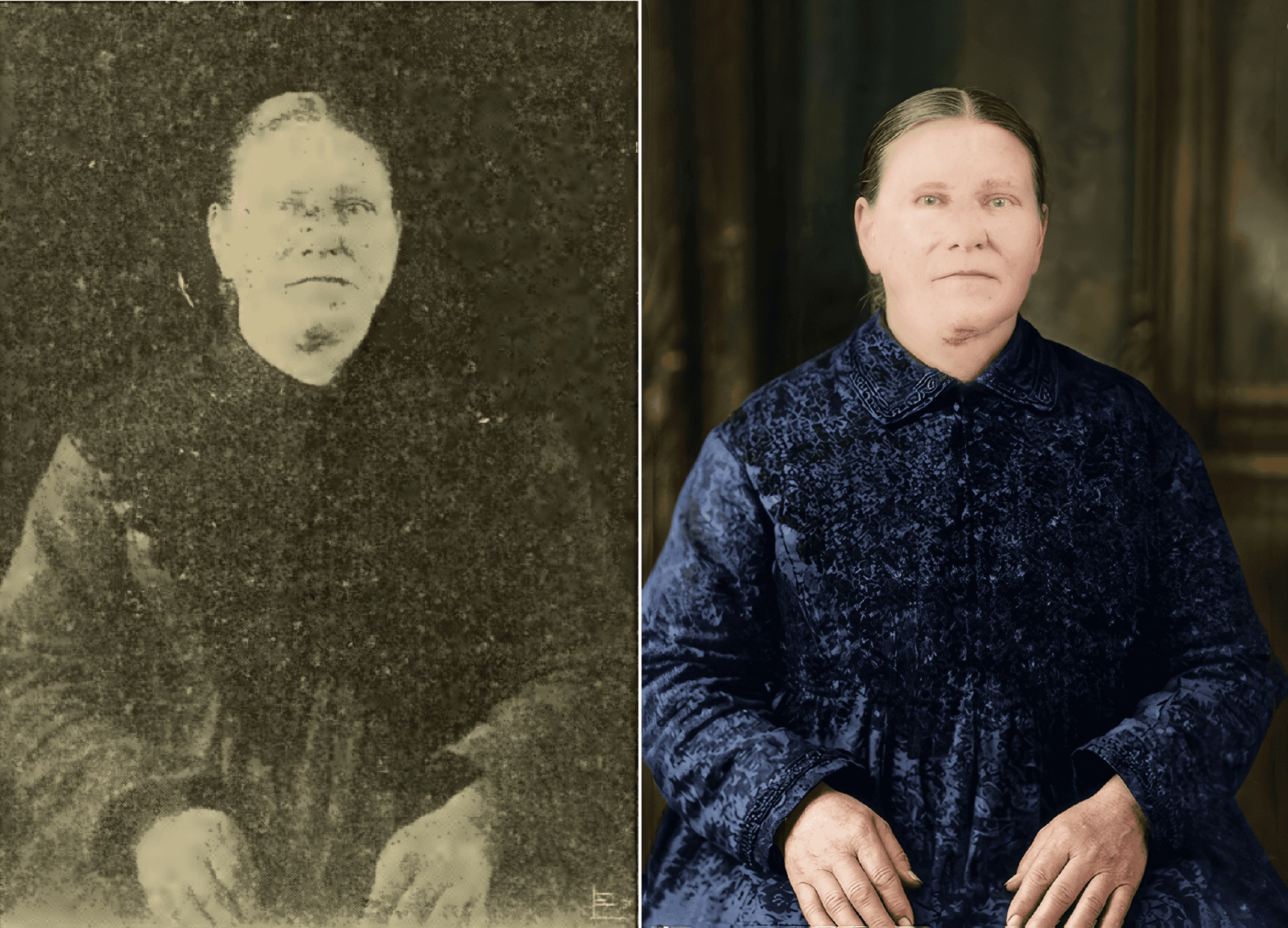
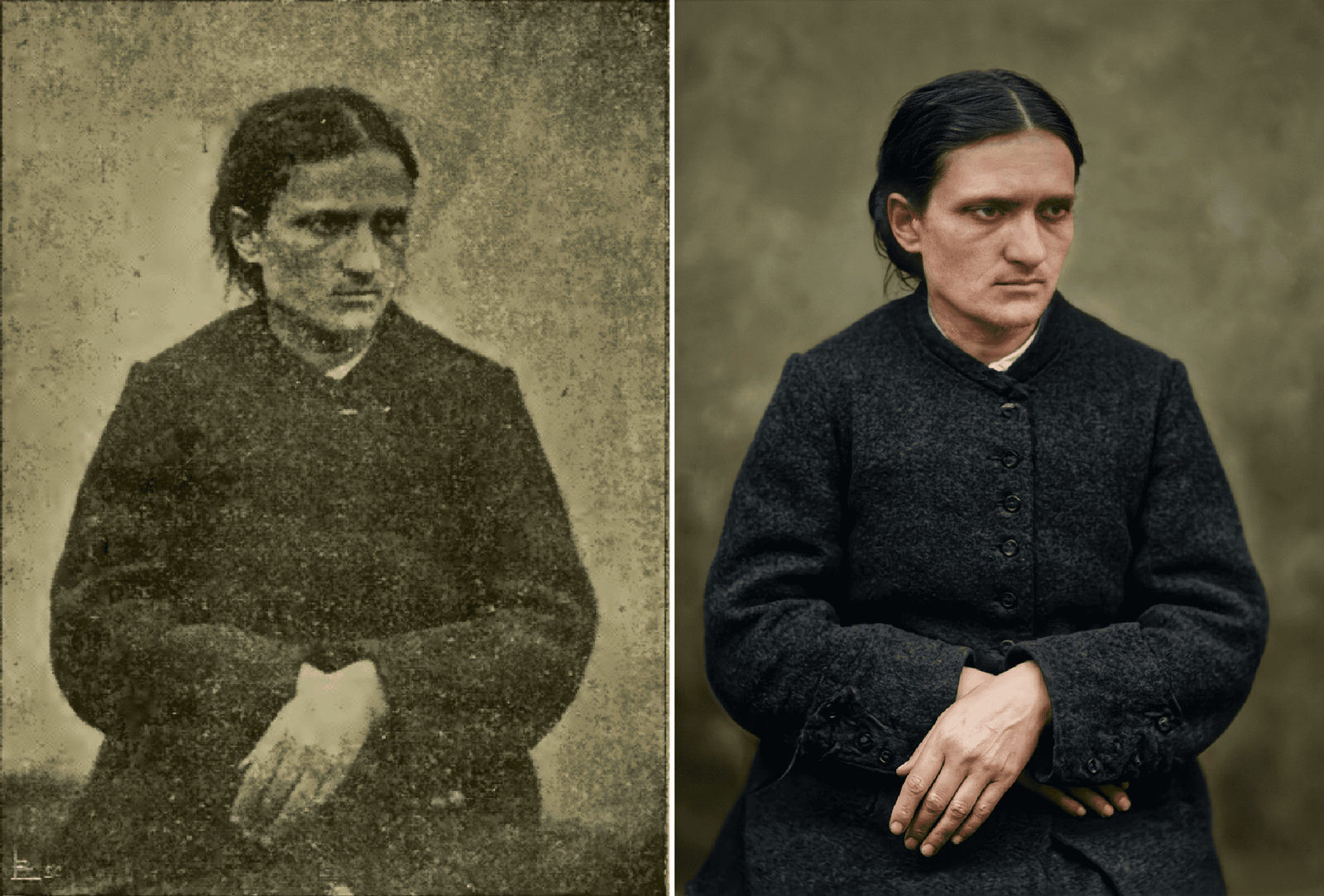
Faces from the 1897 edition
The 1897 monograph printed photographs of the patients whose cases it describes. Each plate is shown here beside a version restored and colorized with AI.
The authors
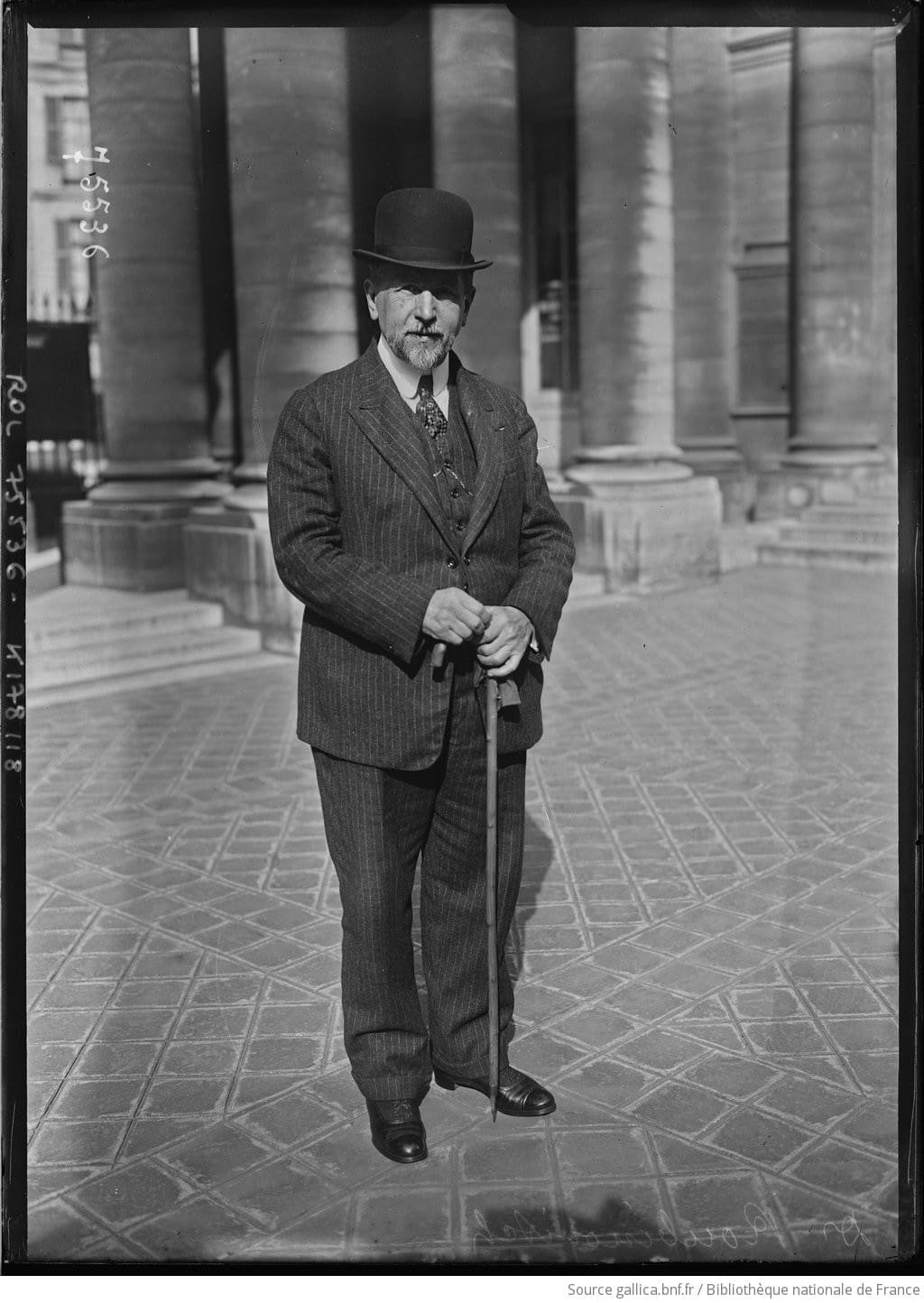
Author, 1897
Jacques Roubinovitch
Born in Odessa in 1862 to a French mother and a Ukrainian-Jewish father, he became head of the clinic of mental illness at the Paris Faculty of Medicine in 1894 and chief physician at Bicêtre in 1899. He helped reform the French law on the insane, later turned to child psychiatry and juvenile delinquency, and during the occupation was arrested by the Germans and held at the Rothschild Hospital, where he is said to have comforted the patients. He died in Paris in 1950.
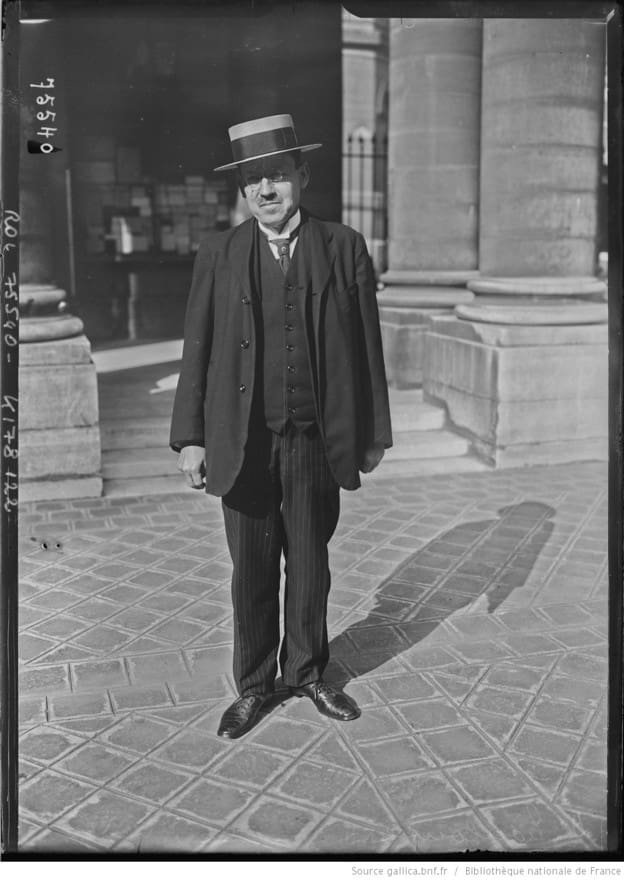
Author, 1897
Édouard Toulouse
Born in Marseille in 1865, he was a journalist and drama critic before turning to psychiatry, writing his thesis on melancholia in elderly women. He directed the Villejuif asylum from 1898, studied genius with Émile Zola, and later opened the first free outpatient psychiatric service, at the Henri-Rousselle Hospital. A psychiatric hospital in Marseille bears his name.
Both men worked at the Sainte-Anne asylum in Paris under Alix Joffroy, whose patients fill the pages of La Mélancolie. They wrote together to share their observations with other practitioners, and remained collaborators for life: in the early 1920s they co-founded the French League of Mental Hygiene, which continues today as the Ligue Française pour la Santé Mentale.
Photographs: Agence Rol, 1 June 1922, European Congress of Mental Hygiene, Paris. Source: gallica.bnf.fr / Bibliothèque nationale de France.

Translator and commentator
Kenneth S. Kendler
Kenneth S. Kendler MD is Professor of Psychiatry and the Director of the Virginia Institute for Psychiatric and Behavioral Genetics at Virginia Commonwealth University and, in addition to his research in the genetics of psychiatric illness, has written extensively on the history of psychiatry.

Translator and commentator
Virginia Justis
Virginia Justis, an embryologist who studied biology and French at the University of Virginia, has worked with Dr. Kendler translating French psychiatric texts from the eighteenth to the twentieth centuries.
Formats
Paperback
ISBN 979-8-950232-20-6
Coming soonHardcover
ISBN 979-8-950232-16-9
Coming soon